Connecting these three metaphysical concepts ultimately requires looking at how we shape and focus our energy: whether that energy is information, light, or “life-force.” At their core, all three serve as interfaces between a raw state and a structured outcome. In this essay, we explore how templates, lenses, and orgonite act as the scaffolding for our reality.
The Architecture of Focus
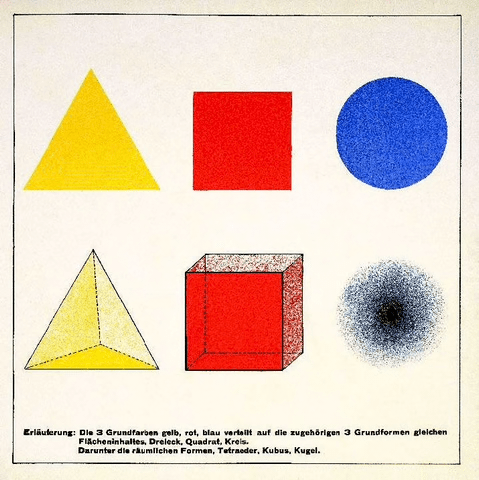
In our attempt to understand the universe, we always find ourselves caught between the formless and formed. We humans exist in a world of raw potential that is unstructured data, ambient light, and chaotic energy. To make sense of this “chaos,” we employ specific tools to filter, focus, and format our experience. Templates, lenses, and orgonite all function as intermediaries that help us transform this raw potential into a structured reality.
The Template: The Blueprint of Efficiency
A template is a predefined pattern that dictates the form of what follows. In the digital and mechanical worlds, templates remove the burden of “starting from zero.” They are the invisible skeletons behind every professional document, every piece of mass-produced hardware, and even the genetic coding within our DNA.
A template does not create the content, but it enforces a boundary. By providing a rigid structure, it allows the user to channel their creative energy into the substance rather than the shape. It is the first step in the transition from chaos to order. A declaration that, out of infinite possibilities, we have chosen this specific configuration.
The Lens: The Arbiter of Perception
While a template provides the structure, the lens provides the focus. In physics, a lens takes ambient, scattered light and converges it into a single point of clarity or expands it to reveal hidden detail. Without the lens, the world is a blur of photons. With it, we gain the ability to see across galaxies, or into the microscopic machinery of a cell.
Metaphorically, we all view the world through cognitive lenses. The biases, languages, and experiences sharpen certain truths while blurring others. A lens is a transformative tool; it doesn’t change the object being viewed, but it changes the viewer’s relationship to it. It is the bridge between the raw data of the universe and the human “image” of reality.
Orgonite: The Filter of Vitality
Moving into the realm of the metaphysical, we find orgonite: a composite of beeswax or resin, metal shavings, and quartz crystal. Based on Dr. Wilhelm Reich’s theories of “orgone” energy, proponents of orgonite view it as a spiritual “scrubber.” Much like a template structures a document or a lens focuses light, orgonite takes “DOR” (Deadly Orgone Radiation) and convert it into “POR” (Positive Orgone Radiation).
Whether viewed as a functional tool or a symbolic object, orgonite represents the human desire to harmonize our environment. It acts as a stationary filter for the invisible energies we move through daily: EMF frequencies, emotional stress, plus environmental static. It is a physical manifestation of the intent to take something disorganized and “toxic” and reorganize it into something coherent, spiritually healing, as well as life-affirming.
The Synthesis: Shaping the Unseen
Hence, when we look at these three subjects together, a shared geometry emerges.
- The Template is the form.
- The Lens is the focus.
- Orgonite is the filter.
All three serve as transducers. They take an input that is too broad, too fast, or too disorganized for us to handle and refine it into something usable. We use templates to organize our thoughts, lenses to clarify our vision, and orgonite to harmonize our space.
Ultimately, these tools remind us that we are not passive observers of the universe. We are active participants who use the “scaffolding” of science and belief to shape the raw energy of existence into a world we can understand, navigate, and inhabit.
 Template Lens